2D FDTD electromagnetic field analysis of arbitrarilly shaped two- dimensional microwave circuits. Software (commercial) available from
ArguMens GmbH, Bismarckstr. 67, 47057 Duisburg, Germany, Fax: +49-203-350874
A C++ Class Library for solving three dimensional electromagnetic problems in time domain by Finite Integral Method by Hiroshi Abe. LEM provides the application programmer and the user the benefit of advanced object- oriented programming.
Hiroshi Abe, C&C Media Research Laboratories, NEC Corporation, JAPAN.
- Email:
This email address is being protected from spambots. You need JavaScript enabled to view it.
This code can be used to model wave propagation in urban environments in 2D. It is based on the Transmission Line Matrix (TLM) method.
- Link (29 Nov 2008)
A simple 3D symmetrical condensed node TLM program, written in Fortran (77) by J. L. Herring.
- Original link (29 Nov 2008, offline)
- Link
CD-ROM featuring sample FDTD codes with visualization capabilities.
Allen Taflove, Susan C. Hagness, Computational Electromagnetics: The Finite-Difference Time-Domain Method, Second Edition. Artech House, Boston 2000.
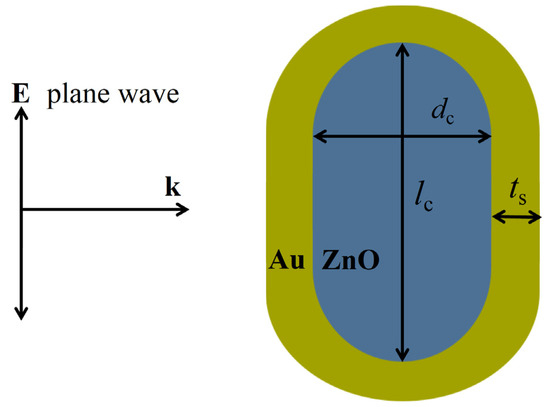
CoupledElectricMagneticDipoles.jl is a set of modules implemented in the Julia language. Several modules are provided to solve typical problems encountered in nano-optics and nano-photonics including light emission by point sources in complex environments, electromagnetic wave scattering by single objects with complex geometry or collections of them. Optical forces can also be computed with this software package.
- Link (28 Aug 2025)

DGF Python code printed in printed in M DeRosier:
LIGHT SCATTERING MODEL THROUGH COMPUTATIONAL METHODS IN PYTHON USING A DIGITIZED GREEN FUNCTION BY SCATTERING OF SMALL PARTICLES
Brigham Young University - Idaho, 2022.
- Link (26 Aug 2025)
TorchGDM is a PyTorch implementation of the Green's dyadic method (GDM), a electro-dynamics full-field volume integral technique. It's main features are multi-scale simulations combining volume discretized and effective e/m polarizability models, as well as the general support of torch's automatic differentiation.